Luke 2: 8 - 10 "And there were shepherds living out in the fields near by, keeping watch over their flocks at night. An angel of the Lord appeared to them and the glory of the Lord shone around them and they were terrified. But the angel said to them, 'Do not be afraid. I bring you good news that will cause great joy for all the people.'"
Luke 16 So they hurried off and found Mary and Joseph and the baby, who was lying in the manger.
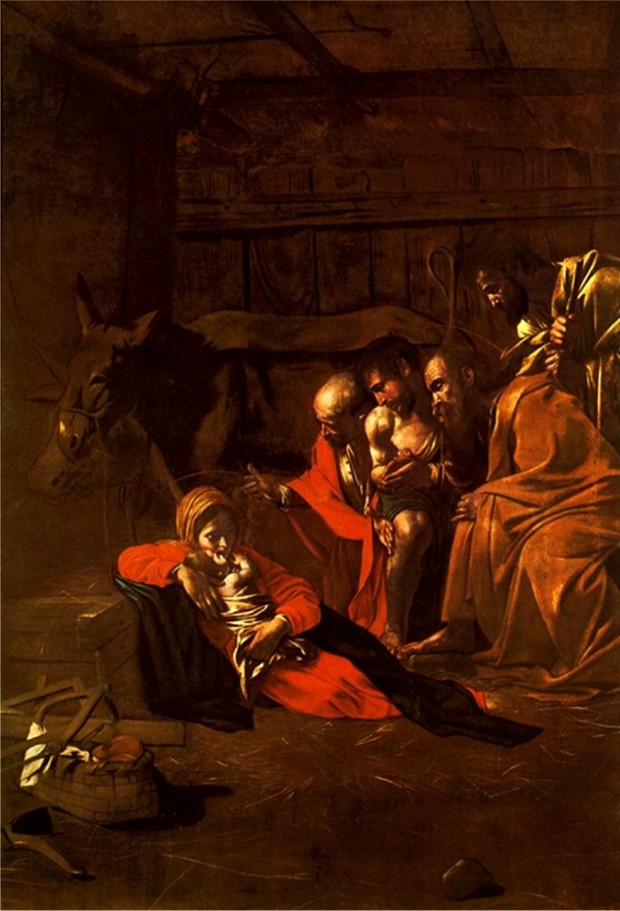
Below - The Adoration of the Shepherds - 1609 - Caravaggio Museo Regionale, Messina
This picture was commissioned for the Capuchin Franciscans and depicts the scene with simplicity. Joseph is in red and the shepherds in brown and grey. Many were critical of Caravaggio's approach to his religious paintings and called it "vulgar" to represent biblical figures as ordinary peasants.
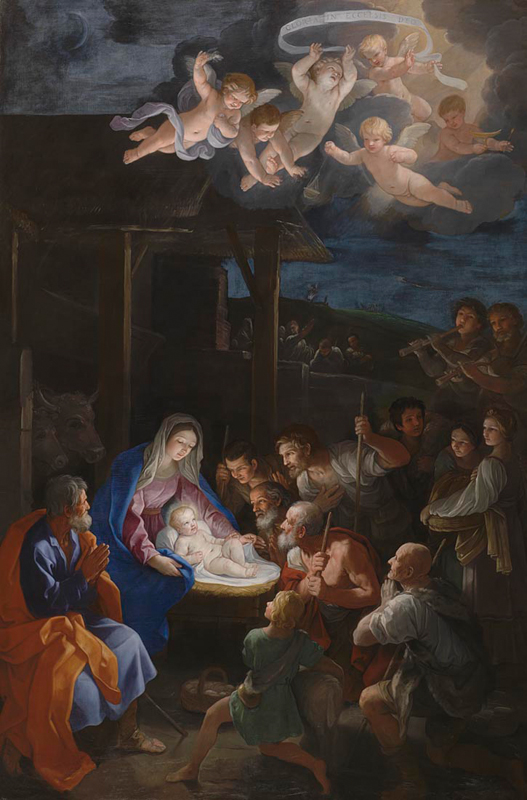
In The Adoration of the Shepherds - (around 1640) - Guido Reni – National Gallery we see the shepherds, young and old, crowding around the baby. A host of angels bear a scroll with the words they sang to the shepherds to announce the birth – Gloria In Eccelsis Deo (Glory to God in the Highest).
Edward Stott (1859–1918), Adoration of the Shepherds (date not known), pastel, 37 x 33 cm, location not known. Wikimedia Commons.
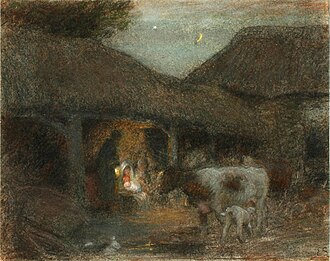
Edward Stott was an English artist born in Rochdale, Lancashire in 1855. He studied in France before settling in Amberley in rural Sussex where he was the central figure in an artistic colony. His forte was painting scenes of domestic and working rural life and the surrounding landscapes often depicted in fading light.
In the early twentieth century, he painted a few religious motifs, including this undated pastel nocturne of the Adoration of the Shepherds.