Luke 2: 6 - 7
While they were there, the time came for the baby to be born and she gave birth to her firstborn, a son. She wrapped him in cloths and placed him in a manger, because there was no guest room available for them.
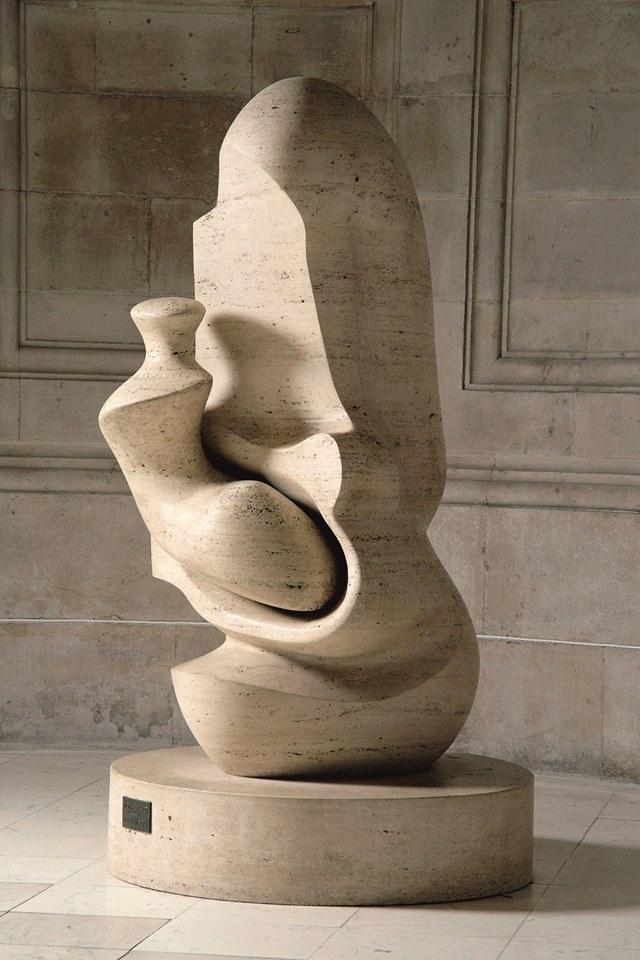
Here are 2 contrasting pieces. The first The Nativity at Night was painted around 1490. The second is a sculpture by Henry Moore that can be seen in St Paul's Cathedral
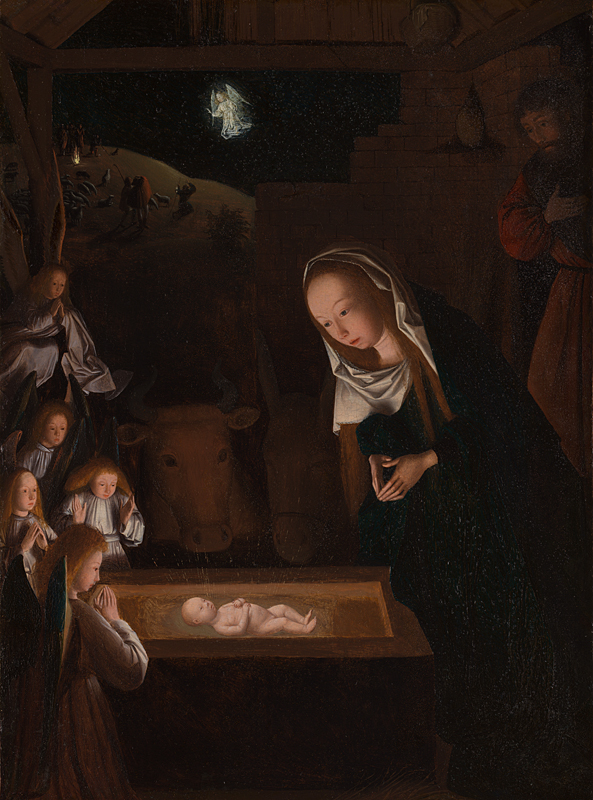
In this small devotional painting Geertgen tot Sint Jans (‘little Gerard of the Brethren of Saint John’) does not show the baby in traditional swaddling clothes. Instead, the tiny naked child exudes rays of supernatural light which illuminate the night-time scene, one of the first realistically painted night scenes in Northern art.
It is so dark that we can barely make out Joseph standing behind to the right, or the faces of the ox and ass as they too look into the manger at the unexpected contents. The light emanating from the Christ Child lights up the faces of the little angels and emphasises their wonderment at his miraculous birth. You can read more on the National Gallery website Geertgen tot Sint Jans | The Nativity at Night | NG4081 | National Gallery, London
This sculpture Mother and Child: Hood was made by Henry Moore specifically for its location in the Minor Canons’ Aisle of St Paul's Cathedral. The work presents three stages of motherhood: conception, gestation and parenting. These gradually reveal themselves as you walk around the sculpture. See more on the website of St Paul's Cathedral.